
As veterinarians, trainers, and horse owners, we all share the same goal: keeping our equine athletes comfortable, sound, and performing at their best for as long as possible. Joint injections are an effective and valuable treatment for managing inflammation and arthritis in performance horses, but many owners are understandably interested in therapies that may help maintain comfort and performance while potentially reducing the frequency of injections.
One of the most valuable tools in integrative sports medicine is Extracorporeal Shockwave Therapy (ESWT), commonly referred to as shockwave therapy.
What Is Shockwave Therapy?
Shockwave therapy uses high-energy acoustic waves that are delivered to targeted tissues. These shockwaves create controlled mechanical stimulation within tissues, which cells convert into biochemical signals through a process known as mechanotransduction. Shockwave therapy is much more than simply a pain-management tool. Modern research has demonstrated that it initiates a complex series of biological responses that stimulate tissue repair, improve circulation, reduce inflammation, and promote regeneration of damaged musculoskeletal tissues. In essence, shockwave therapy helps activate and enhance the body's natural healing processes.
The biological effects of shockwave therapy include increased blood flow, formation of new blood vessels, enhanced cellular metabolism, improved oxygen and nutrient delivery to damaged tissues, stimulation of collagen production and tissue remodeling, modulation of inflammation, and reduction of pain signaling. Together, these effects can improve tissue healing, comfort, mobility, and overall performance.
Because shockwave therapy influences blood flow, inflammation, tissue metabolism, collagen production, and cellular repair, its applications extend far beyond simply managing joint pain. In horses, shockwave is commonly used to treat tendon and ligament injuries, proximal suspensory disease, sacroiliac dysfunction, hock and stifle pain, back and neck soreness, muscle tension, stress-related bone injuries, splints, and areas of chronic inflammation or fibrosis.
Joint Injections: An Important Tool, Not a Maintenance Program
Joint injections remain one of the most valuable treatments available in equine sports medicine. When inflammation develops within a joint, intra-articular therapies can reduce pain, improve comfort, and help preserve joint health. I am certainly not opposed to joint injections. In many cases they are absolutely the right treatment and can play an important role in keeping horses comfortable and performing at a high level.
However, one of the most common misconceptions in horse medicine is that every decline in performance originates within a joint.
A horse that is struggling with collection, resisting a lead change, lacking impulsion, feeling stiff under saddle, or experiencing mild lameness may certainly have joint inflammation. However, those same signs can also result from muscular tension, fascial restrictions, tendon and ligament strain, foot imbalance, reduced spinal mobility, sacroiliac dysfunction, or compensatory movement patterns.
This is why I encourage owners to think carefully before labeling routine injections as "maintenance." Injections are medical treatments designed to address a specific diagnosis and a specific source of inflammation. While they can be incredibly beneficial when appropriately indicated, they should ideally be part of a larger strategy aimed at understanding why a horse is becoming uncomfortable in the first place.
Like any medical procedure, joint injections also come with limitations and risks. Every injection carries some degree of risk, including infection, post-injection flare, local tissue irritation, and cost considerations. Additionally, arthritis is a progressive disease, and many horses ultimately require treatment at increasingly shorter intervals as degenerative changes advance.
This does not mean injections are inappropriate. Rather, it highlights the importance of incorporating therapies that support the health of surrounding tissues, address biomechanical dysfunction, and potentially reduce the frequency with which intra-articular treatments are needed.
Where Shockwave Fits In
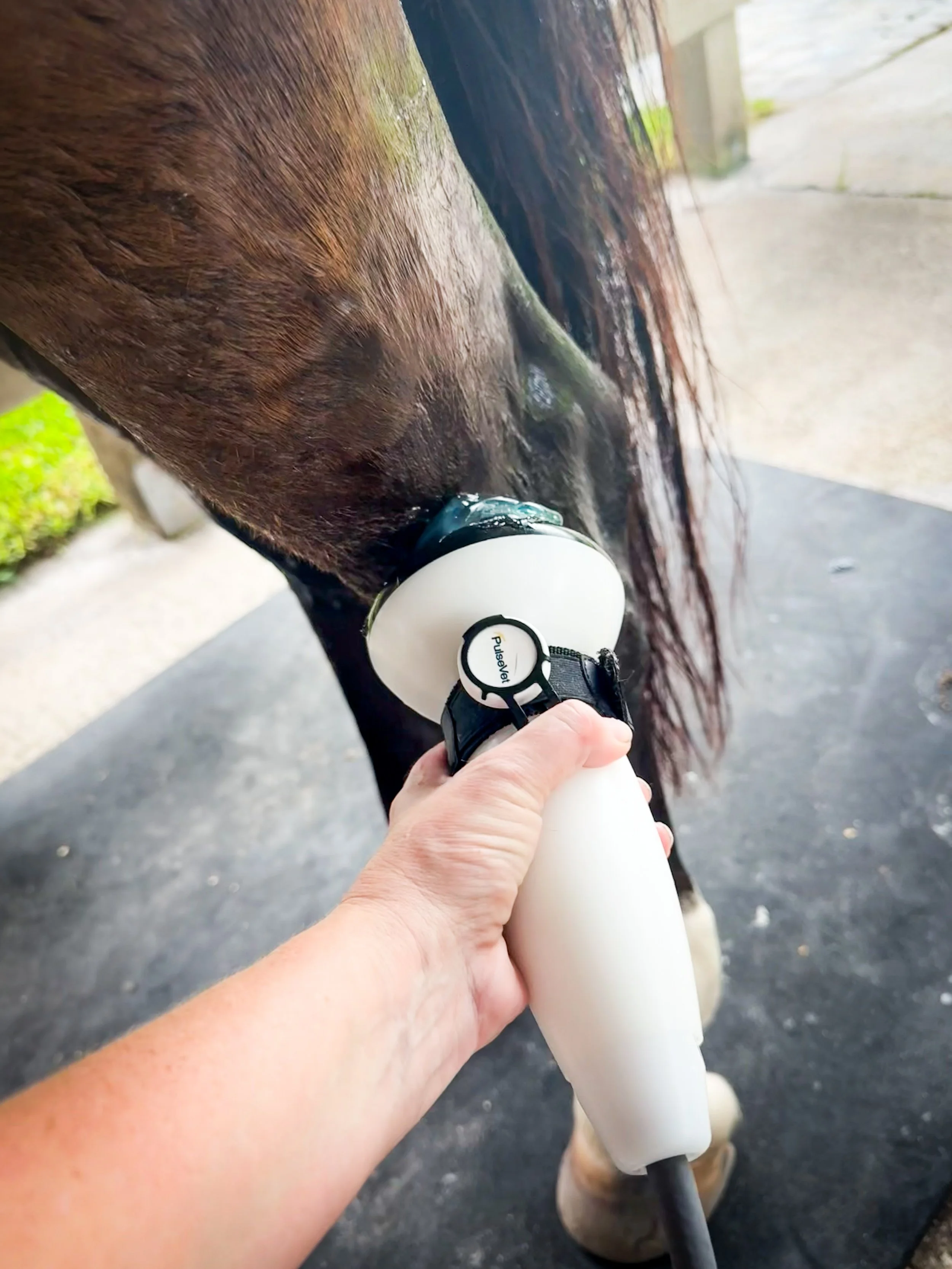
One advantage of shockwave therapy is that it allows us to treat an entire region rather than a single structure.
Performance limitations rarely arise from one isolated tissue. A horse with hock arthritis, for example, may also develop joint capsule inflammation, periarticular fibrosis, compensatory suspensory strain, altered biomechanics, muscle tension through the lumbar and gluteal regions, secondary sacroiliac stress, and reduced range of motion.
A joint injection addresses inflammation within the joint itself. Shockwave therapy, however, can simultaneously influence many of the surrounding tissues contributing to pain and dysfunction. This broader biologic effect often makes shockwave particularly valuable in the performance horse where multiple structures are commonly involved.
Shockwave therapy can be particularly beneficial when a horse is showing early signs of discomfort, mild lameness, reduced performance, stiffness, or compensatory muscle soreness but has not yet reached the point where joint injections are clearly necessary. By addressing pain and inflammation in surrounding soft tissues, ligaments, tendons, muscles, fascia, and joint-associated structures, shockwave may help improve comfort and function while reducing stress on affected joints.
Common conditions treated with shockwave therapy include:
Proximal suspensory disease
Tendon and ligament injuries
Sacroiliac dysfunction
Hock pain and osteoarthritis
Stifle pain and osteoarthritis
Back pain and thoracolumbar soreness
Neck stiffness and cervical discomfort
Splints
Stress-related bone injuries
Chronic muscular tension and myofascial pain
Areas of fibrosis and scar tissue
In many cases, the primary source of a horse's discomfort is not the joint itself, but the surrounding tissues that are compensating for biomechanical dysfunction.
The Integrative Medicine Approach
One of the most common findings during a lameness or performance evaluation is that multiple factors are contributing to a horse's discomfort simultaneously.
These may include:
Muscle tension
Fascial restrictions
Reduced spinal mobility
Sacroiliac dysfunction
Poor core strength
Compensatory movement patterns
Foot imbalance
Tendon or ligament strain
Joint inflammation
If these issues are not identified and addressed, even appropriately injected joints may only experience temporary improvement because the underlying biomechanical stresses remain unchanged.
This is where integrative medicine can be particularly valuable. Rather than focusing solely on a single joint or diagnosis, we evaluate the horse as a complete athlete and develop a treatment plan that addresses all contributing factors.
Can Shockwave Replace Joint Injections?
Sometimes yes—but not always.
Shockwave therapy is not a replacement for appropriate diagnostics or necessary medical treatment. Horses with significant arthritis, advanced joint disease, or substantial inflammation may still require joint injections as part of their treatment plan.
However, many horses with mild to moderate performance limitations can experience significant improvement with shockwave therapy, allowing injections to be postponed or used less frequently. Similarly, horses with established arthritis often achieve better outcomes when shockwave therapy and other integrative modalities are incorporated alongside joint injections.
In our practice, we often find that combining shockwave therapy with other therapies provides the greatest benefit.
These may include:
Traditional Chinese Veterinary Acupuncture
Veterinary Medical Manipulation (animal chiropractic)
Rehabilitation and therapeutic exercises
Therapeutic laser therapy
PEMF therapy
Nutritional support and herbal medicine
Appropriate conditioning and strengthening programs
By addressing the horse as a whole athlete, we can often improve performance while minimizing the need for more invasive interventions.
What Does Treatment Involve?
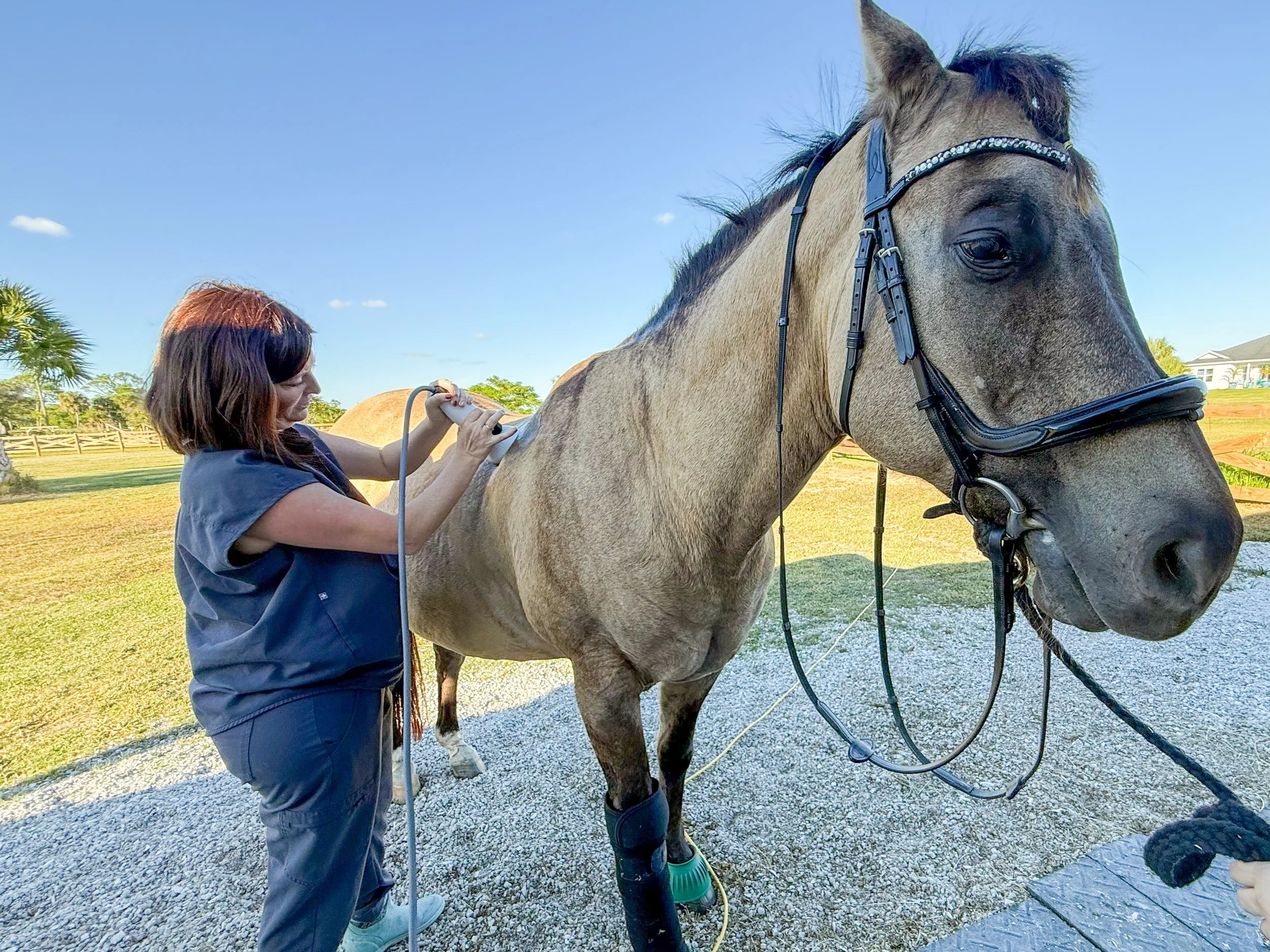
Shockwave treatments are performed stall-side and are generally very well tolerated. With advances in modern shockwave technology, sedation is often unnecessary.
Most horses demonstrate improvement after their first treatment, although optimal results are typically achieved through a series of two to three treatments performed approximately two to three weeks apart.
Benefits may include:
Improved comfort
Increased range of motion
Better willingness under saddle
Improved flexibility and mobility
Reduced lameness
Enhanced performance
Many horses maintain improvement for several months following treatment.
Important Considerations for Competition Horses
Owners of competition horses should be aware that many organizations regulate shockwave therapy. For example, the Fédération Equestre Internationale (FEI) prohibits the use of shockwave therapy on competition grounds and during the five days preceding competition. Other organizations may have similar regulations regarding timing and use.
It is always the responsibility of owners, riders, and trainers to understand and comply with the rules governing their specific discipline.
The Bottom Line
Joint injections remain an important tool in modern sports medicine, but they are not the only option available for managing discomfort and maintaining performance.
In many cases, the question should not be "Does this horse need injections?" but rather "What factors are causing this horse to need injections?" By addressing soft tissue health, biomechanics, compensatory patterns, and tissue healing, shockwave therapy may help extend the period between injections, improve overall performance, and support long-term soundness.
Shockwave therapy offers a non-invasive, evidence-based approach that can help many horses remain comfortable, recover from injury, and continue performing at a high level. When combined with a comprehensive evaluation and an integrative treatment plan, shockwave therapy may help delay the need for joint injections and support long-term soundness in the equine athlete.
Every horse is unique. The best treatment plan begins with identifying the true source of pain or dysfunction and developing an individualized strategy that supports both performance and long-term musculoskeletal health.
