

Helping Your Pet Weather the Storm: Integrative Solutions For Thunderstorm & Fireworks Anxiety
Florida summers bring sunshine, beach days, and outdoor celebrations—but for many pets, they also bring anxiety.
Thunderstorm and hurricane season is well underway, and before long, Fourth of July fireworks will be lighting up the sky. While some pets tolerate these events without difficulty, others experience significant fear and anxiety. Trembling, panting, pacing, hiding, vocalizing, destructive behaviors, and attempts to escape are all common signs of noise-related anxiety.
At Fauna Doc Integrative Veterinary Services, we frequently help pets struggling with thunderstorms, fireworks, travel anxiety, veterinary visits, and other stress-inducing situations through a comprehensive integrative approach. By combining acupuncture, Traditional Chinese Veterinary Medicine (TCVM), Chinese herbal medicine, PEMF therapy, vagal-support therapies, environmental modification, and when necessary, conventional medications, we aim to help pets feel calmer, more comfortable, and better equipped to cope with life's stressors.
Understanding Noise Anxiety
Noise anxiety is much more complex than simply being startled by a loud sound.
Many pets begin reacting long before a storm arrives. Changes in barometric pressure, humidity, static electricity, wind, and distant thunder can all trigger an anticipatory stress response. By the time a pet is visibly trembling, panting, pacing, or hiding, their nervous system is often already in a heightened state of arousal.
This leads to one of the most important concepts in anxiety management:
The goal is to prevent anxiety from escalating rather than attempting to stop a panic response after it has already begun.
Timing Matters: Think Prevention, Not Reaction
One of the most common situations we encounter is owners administering anxiety medications only after their pet is already frightened.
While medications such as trazodone, alprazolam, gabapentin, and acepromazine can be extremely helpful, they generally work best when administered before anxiety reaches a severe level.
The same principle applies to many anxiety-management strategies, including:
Prescription medications
ThunderShirts® and pressure wraps
Calming supplements
Environmental modifications
As a general guideline, many interventions work best when implemented approximately 2–3 hours before anticipated storms or fireworks whenever possible.
During Florida's thunderstorm season, this often means monitoring weather forecasts and radar throughout the day. Likewise, for holidays such as the Fourth of July, preparations should ideally begin well before the fireworks start.
Waiting until a pet is already in a state of panic makes it much more difficult for any intervention to be effective.
How Acupuncture May Help
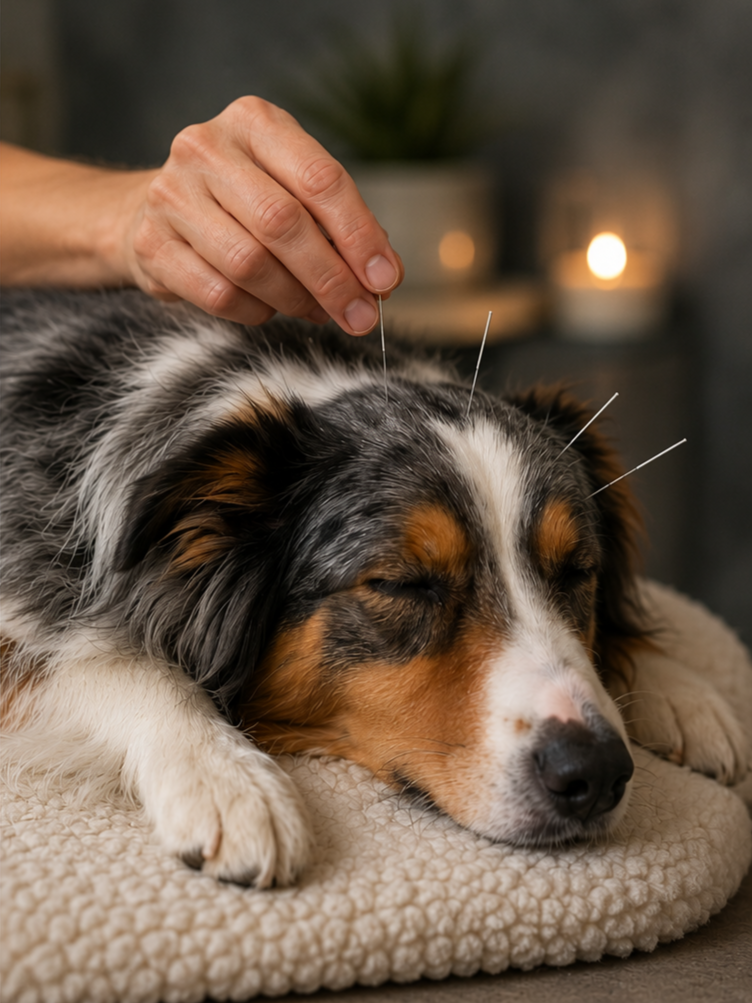
Acupuncture has been used for centuries to help regulate the body's nervous system and promote relaxation. Many pets visibly relax during treatment sessions, and owners frequently report improvements in overall anxiety levels, sleep quality, and stress tolerance.
When treating anxiety, acupuncture focuses on calming the nervous system while addressing the underlying imbalances identified through a Traditional Chinese Veterinary Medicine evaluation.
Treatment protocols may include:
Generalized calming acupuncture points
Pattern-specific TCVM points
Nervous system regulation
Relaxation-focused protocols
Ashen point therapy
For many patients, acupuncture becomes an important component of a long-term strategy designed to improve resilience and reduce reactivity to stressful situations.
Ashen Point Therapy
One of our favorite techniques for noise induced anxious patients is stimulation of the Ashen point, a calming acupuncture point located near the ear.
Depending on the patient's needs, this may involve:
Traditional dry-needle acupuncture
Vitamin B12 mixed with saline injected into the point (aquapuncture)
In select cases, micro-dosing of very small amount of acepromazine injected into the Ashen point via aquapuncture.
The purpose of these treatments is not heavy sedation. Rather, they provide prolonged stimulation of a calming acupuncture point and may help support relaxation during stressful periods. Most patients experience benefits that extend beyond the treatment appointment itself and last weeks to months.
Chinese Herbal Medicine for Anxiety
Traditional Chinese Veterinary Medicine recognizes that anxiety can arise from several different underlying patterns. As a result, herbal recommendations are individualized to each patient rather than prescribed using a one-size-fits-all approach.
Depending on the patient's TCVM diagnosis, herbal formulas may be selected to:
Calm the Shen (mind and spirit)
Reduce restlessness
Improve sleep quality
Support emotional balance
Enhance resilience to stress
When combined with acupuncture, herbal medicine can provide valuable support during Florida's storm season and holiday celebrations.
PEMF Therapy and Vagal Support
Pulsed Electromagnetic Field (PEMF) therapy is another integrative tool that may help support relaxation and nervous system regulation.
Many pets find PEMF sessions calming and enjoyable. By supporting normal cellular function and encouraging relaxation, PEMF can be incorporated into a comprehensive anxiety-management plan. One example is the Assisi® Canine Calmer, a PEMF device specifically designed to support relaxation and emotional well-being in dogs.
We may also incorporate vibration-based therapies designed to encourage activation of the parasympathetic nervous system—the body's natural "rest and digest" state. Supporting parasympathetic activity may help reduce physiologic stress responses and promote relaxation in some patients. One example is the Rezzimax® Pain Tuner Pro, a handheld vibration device commonly used for vagal-support therapy. Many patients appear to benefit from its calming effects when incorporated into a broader anxiety-management program.
Creating a Calming Environment
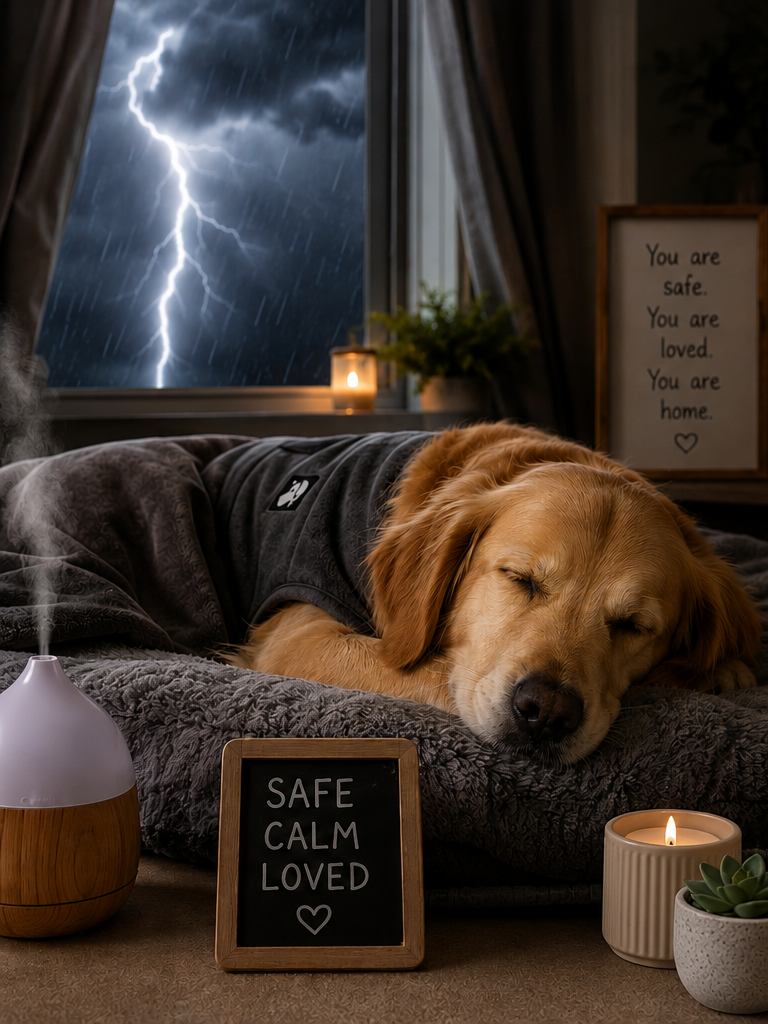
Environmental management plays an important role in helping anxious pets cope with storms and fireworks.
Helpful strategies may include:
Closing blinds and curtains
Running fans or white noise machines
Creating a designated safe space
Using ThunderShirts® or pressure wraps
Utilizing pheromone products when appropriate
Incorporating calming music
Some owners report success using classical music, species-specific relaxation tracks, and music utilizing Solfeggio frequencies, particularly 528 Hz. While research in veterinary patients remains limited, some human studies have suggested that 528 Hz music may promote relaxation and reduce physiologic markers associated with stress.
Whether through calming music, white noise, or other auditory therapies, creating a soothing environment can be a simple and inexpensive way to support your pet during stressful events. As with other anxiety-management tools, calming music tends to be most effective when started before anxiety begins rather than after a pet has already entered a state of panic.
A Multi-Modal Approach Often Works Best
There is rarely a single solution for noise phobias.
The most successful treatment plans often combine several strategies tailored to the individual patient, including:
Acupuncture
Aquapuncture at Ashen (and other acu-points)
Chinese herbal medicine
PEMF therapy
Rezzimax® vagal-support therapy
ThunderShirts® or pressure wraps
Environmental modifications
Calming music
Behavior modification training
Conventional anti-anxiety medications when indicated
For some patients, integrative therapies may reduce the frequency or amount of medication needed during stressful events. For others, they work best alongside conventional medications to provide the greatest level of comfort and support.
Preparing for Storm Season and the Fourth of July
The best time to address anxiety is before the storms arrive and before fireworks begin.
Developing a proactive plan allows time for acupuncture treatments, herbal support, environmental modifications, and medication protocols to be optimized before anxiety escalates.
If your pet struggles with thunderstorms, fireworks, travel, veterinary visits, separation anxiety, or other stress-inducing situations, now is an excellent time to discuss available treatment options.
Helping Pets Find Calm
Thunderstorms and fireworks may be unavoidable, but suffering through them doesn't have to be.
If your pet struggles with thunderstorms, fireworks, or other anxiety-provoking situations, don't wait until the next storm is overhead or the fireworks have already started. The most successful anxiety-management plans are implemented well in advance of the trigger. With Florida's storm season underway and the Fourth of July quickly approaching, now is the ideal time to schedule an acupuncture evaluation and develop a personalized treatment plan. Give us a call today and help your pet face the season with greater comfort, confidence, and calm.
