

When Your Horse Isn't Quite Right: How Acupuncture Point Sensitivity Scanning Detects Hidden Pain & Performance Problems
Most horse owners can tell when something feels different about their horse. Performance may decline, transitions become more difficult, or a once-willing partner may become resistant under saddle. Often, these changes appear long before obvious lameness develops.
One valuable tool used by TCVM-trained veterinarians is Acupuncture Point Sensitivity Scanning (APSS). This evidence-based assessment helps identify areas of pain and dysfunction that may otherwise go unnoticed, allowing concerns to be addressed before they become more significant.
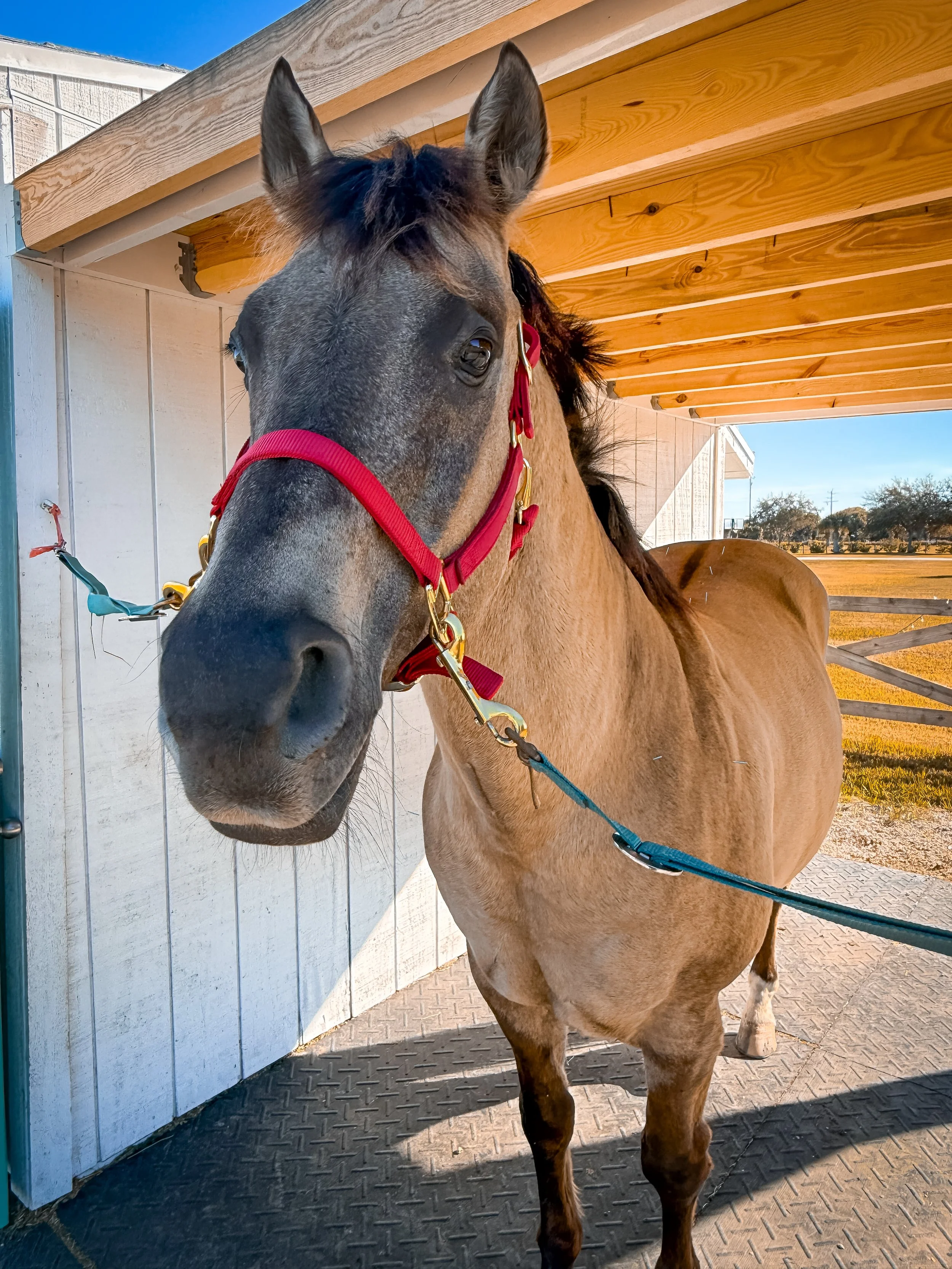
What Is Acupuncture Point Sensitivity Scanning?
Acupuncture Point Sensitivity Scanning is a systematic evaluation of specific acupuncture points throughout the horse's body. These points often become sensitive when underlying musculoskeletal, neurologic, or joint-related dysfunction is present.
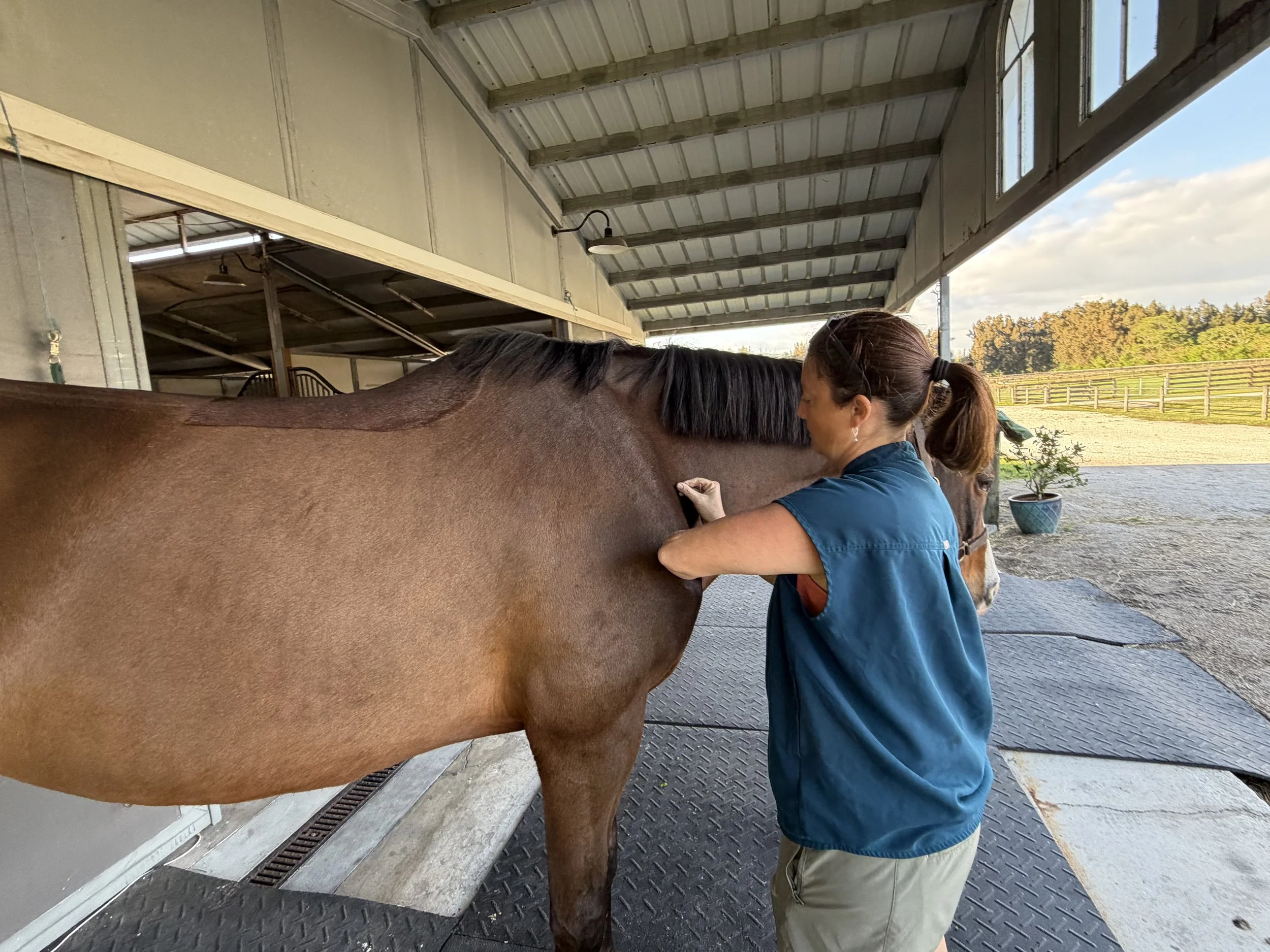
During an APSS examination, a veterinarian gently palpates selected acupuncture points and observes the horse's response. Increased sensitivity at particular locations may indicate discomfort within associated anatomical structures. Because the procedure is quick, non-invasive, and well tolerated by most horses, APSS can easily be incorporated into routine wellness examinations, performance evaluations, and lameness workups.
Detecting Problems Before They Become Obvious
Subtle lameness can be difficult to recognize, even for experienced owners and trainers. Horses are natural athletes and often continue to perform despite underlying discomfort, making early problems easy to overlook.
Research evaluating APSS as a screening tool in performance horses found encouraging results:
• 82.4% Sensitivity – APSS correctly identified the majority of lame horses.
• 78.4% Specificity – Sound horses were accurately classified, reducing false-positive findings.
• 80.4% Overall Accuracy – APSS demonstrated strong reliability as a screening method for lameness.
One particularly noteworthy finding was that more than half of the horses identified as lame had not been recognized as such by their owners.
This closely reflects what we see in practice. Owners rarely schedule an evaluation because they believe their horse is overtly lame. More often, they notice changes such as decreased performance, difficulty picking up a lead, resistance during transitions, reluctance to engage the hind end, stiffness, behavioral changes, shortened stride length, or simply the feeling that their horse is "not quite right."
In many cases, these early warning signs appear before a traditional lameness becomes obvious. APSS can help identify patterns of discomfort and dysfunction during these early stages, allowing veterinarians to investigate underlying causes sooner and develop targeted treatment plans before minor concerns progress into more significant problems.
Why Acupuncture Point Sensitivity Scanning Matters
APSS is not intended to replace a comprehensive veterinary lameness examination or diagnostic imaging. Rather, it serves as an additional assessment tool that can help identify subtle areas of concern and guide further diagnostics and treatment planning.
Benefits of APSS include:
• Early detection of developing lameness
• Non-invasive and stress-free evaluation
• Identification of pain patterns that may otherwise go unnoticed
• Support for targeted diagnostic testing
• Monitoring response to treatment over time
• Recognition of compensatory issues that may affect performance
Research has also demonstrated that APSS findings are reproducible among trained practitioners, supporting its value as a clinically relevant diagnostic tool.
At Fauna Doc, our goal is to recognize early signs of discomfort and dysfunction before they impact long-term soundness and performance. By combining conventional veterinary diagnostics with evidence-based acupuncture assessment, we can often detect abnormalities earlier, develop more targeted treatment plans, and support the horse as a whole rather than focusing solely on a single area of pain.
A Whole-Horse Approach to Soundness
Every horse tells a story through movement, posture, behavior, and performance. Acupuncture Point Sensitivity Scanning provides veterinarians with another way to listen. If your horse is experiencing unexplained performance changes, stiffness, resistance under saddle, behavioral changes, or other subtle signs of discomfort, an APSS evaluation may help uncover underlying issues before they progress into more significant injuries. Early recognition and intervention remain some of the most effective tools we have for helping horses stay comfortable, healthy, and performing at their highest potential.
