
Healing Highlights: Picasso – Helping Every Good Day Count
Real Patients • Real Progress • Real Integrative Care
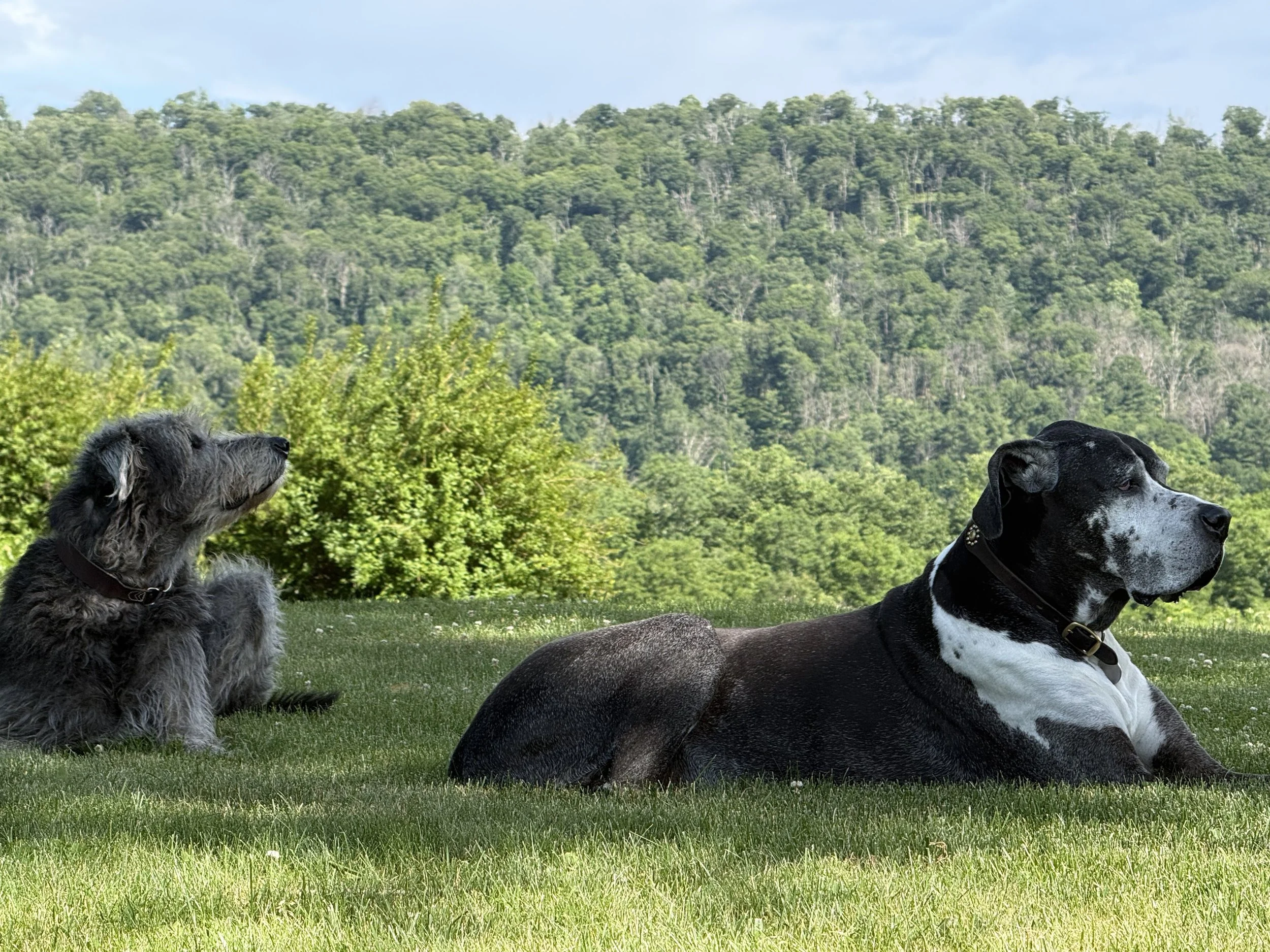
There is something incredibly special about caring for a senior giant-breed dog.
Every extra month—and every extra year—is a gift.
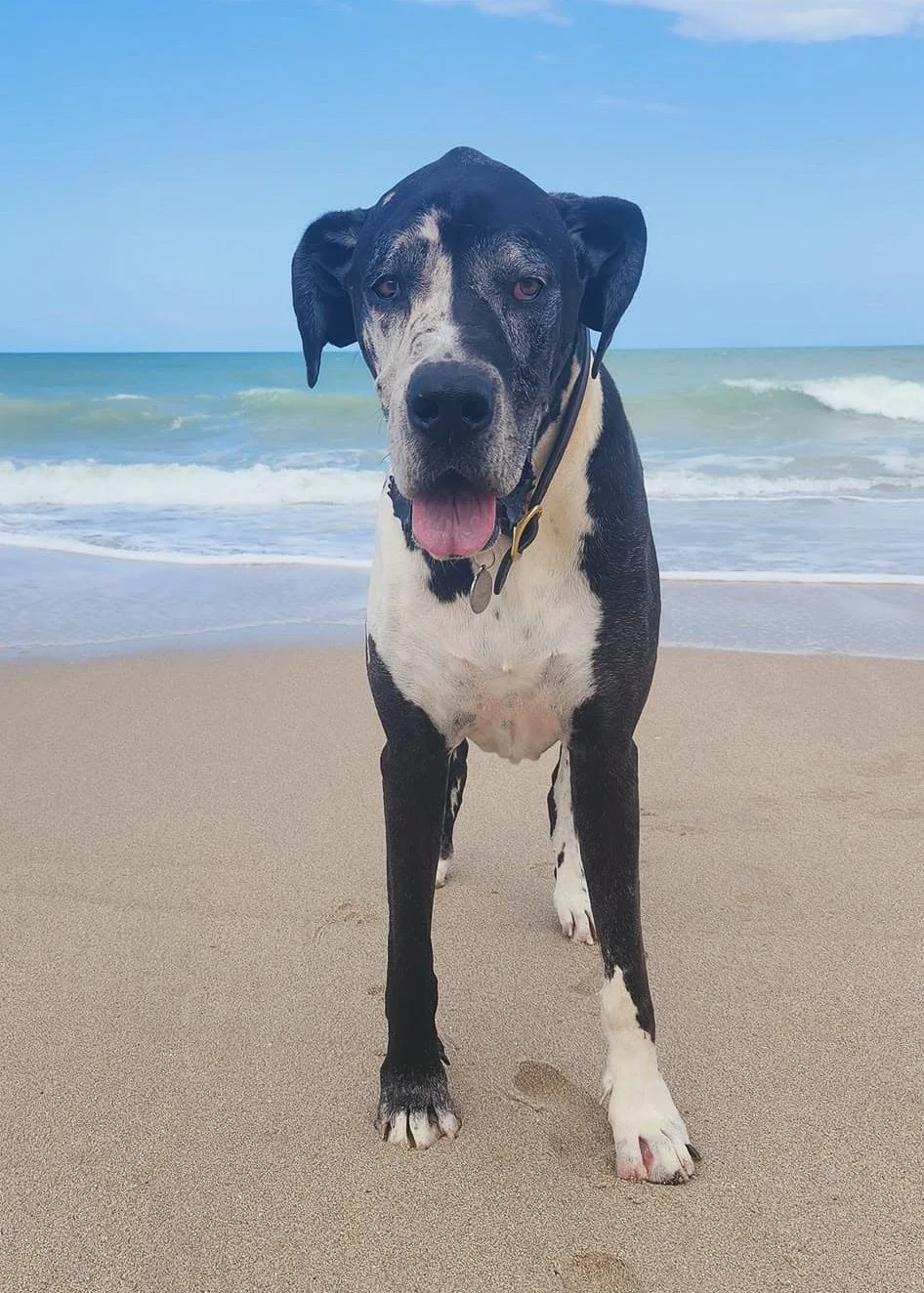
Meet Picasso, an 11-year-old Great Dane whose age alone is remarkable. While every dog is unique, the average life expectancy for a Great Dane is generally 7–10 years, making Picasso's longevity something worth celebrating. More importantly, he isn't just living longer—he's continuing to enjoy the things that make life meaningful.
Picasso's family relocated to Florida last year and was referred to me by one of my veterinary school classmates and fellow veterinary acupuncturist so that his acupuncture care could continue seamlessly. Continuing the integrative care that had already become part of his routine allowed us to build upon an excellent foundation while tailoring his treatment plan to his current needs.
The Value of Bringing Care Home
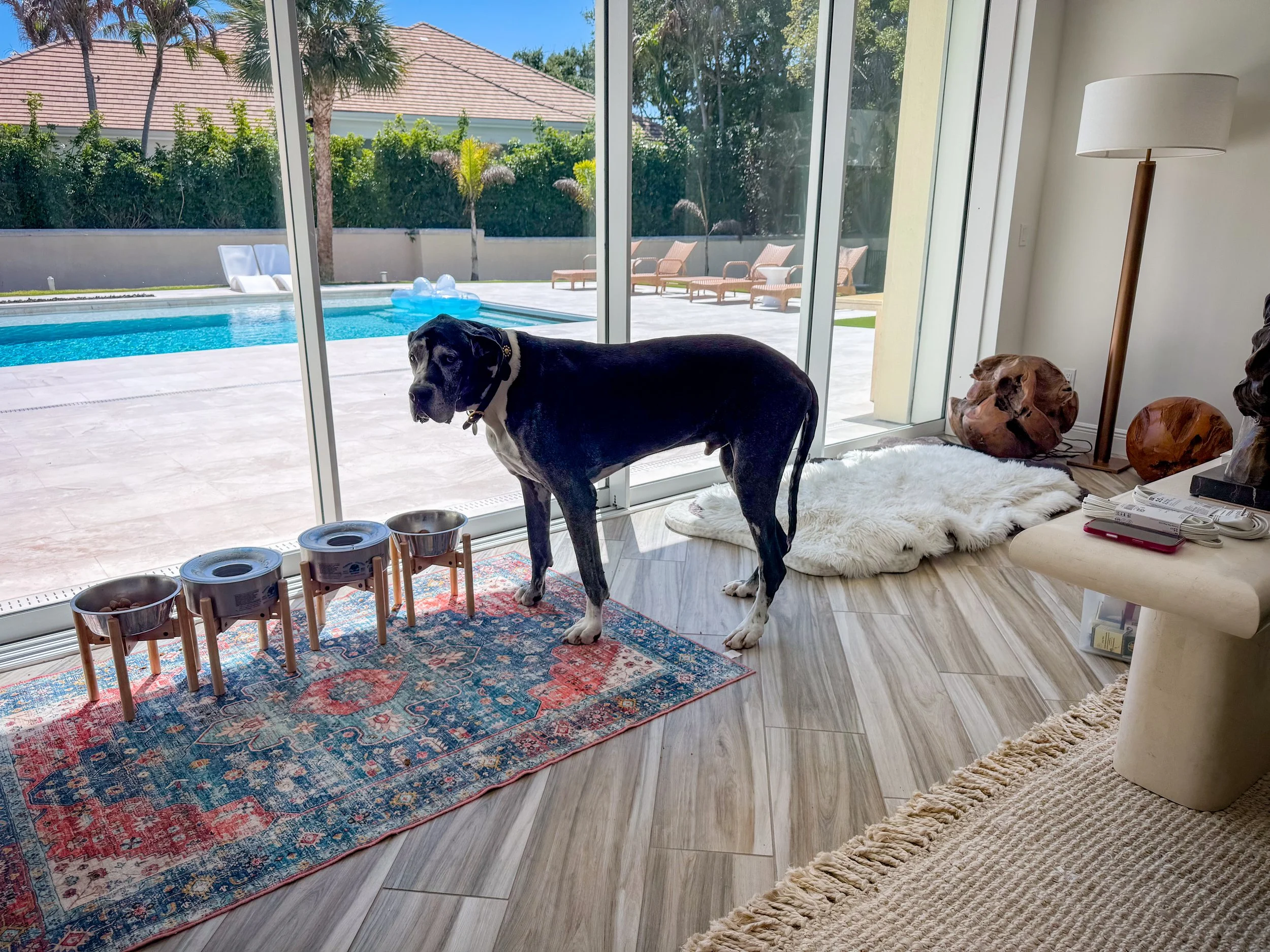
One of the greatest advantages of Picasso's treatment plan is that it comes to him.
At over 11 years old, transporting a giant-breed dog with mobility challenges isn't easy. Simply helping a dog of Picasso's size into the car, driving to a veterinary hospital, walking across unfamiliar flooring, and navigating a busy clinic can be physically demanding for both the patient and the family.
By providing his treatments in the comfort of his own home, Picasso is able to stay relaxed, avoid the added stress of travel, and receive care where he is most comfortable. For many geriatric and mobility-impaired pets, reducing that physical and emotional stress is an important part of the treatment itself.
Looking Beyond Arthritis
Like many aging giant-breed dogs, Picasso has developed several age-related mobility challenges. On his examination, he demonstrates hind limb weakness, mild conscious proprioceptive deficits—meaning he has a slight decrease in his awareness of where his rear paws are positioned—and significantly reduced range of motion throughout his cervical spine.
These findings don't simply affect how he walks. They influence his balance, confidence, ability to rise, and overall quality of life. As dogs age, chronic pain, muscle loss, decreased flexibility, and neurologic decline often occur together. Successfully managing these patients means addressing each of those challenges—not just treating arthritis alone.
An Integrative Approach
Rather than relying on a single therapy, Picasso's care combines conventional medicine with evidence-informed integrative therapies, each chosen because it addresses a different aspect of his condition.
Acupuncture
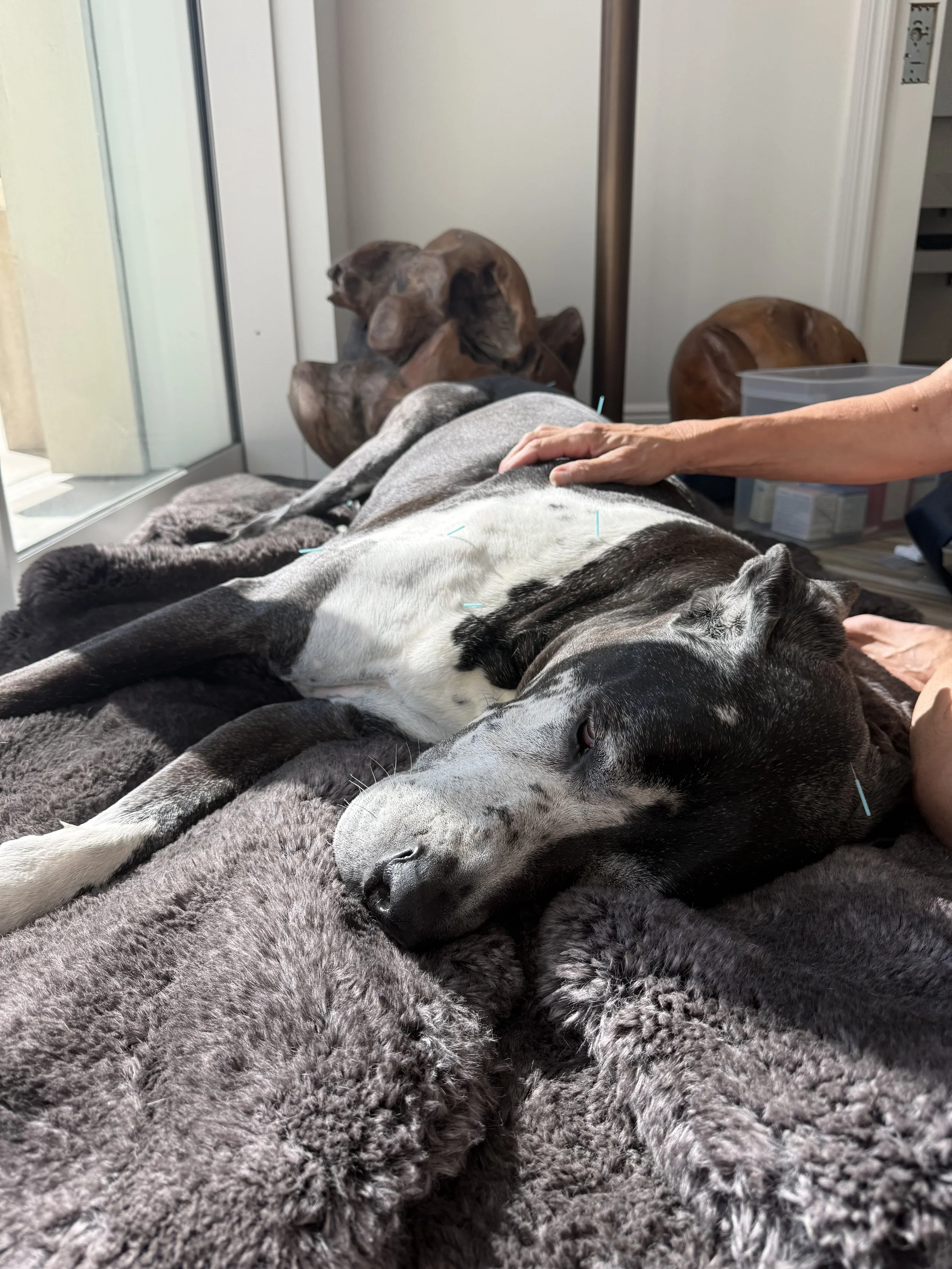
Each month, Picasso receives acupuncture treatments in the comfort of his own home. Acupuncture helps reduce pain, improve circulation, decrease muscle tension, and support healthy neurologic function. For senior dogs experiencing arthritis, chronic pain, and age-related weakness, it provides an excellent way to improve comfort while helping preserve mobility and quality of life.
Traditional Chinese Veterinary Medicine
Picasso's Traditional Chinese Veterinary Medicine (TCVM) pattern is consistent with Kidney Yin Deficiency with Wei Syndrome.
In TCVM, the Kidneys are considered the foundation of healthy aging. As Kidney Yin gradually becomes depleted over time, the body loses some of its ability to nourish the muscles, bones, joints, and nervous system. This can contribute to weakness, stiffness, chronic pain, and reduced mobility.
Wei Syndrome refers to weakness of the limbs resulting from inadequate nourishment of the muscles and nerves. In modern veterinary medicine, this pattern commonly overlaps with geriatric muscle loss, neurologic weakness, and chronic musculoskeletal disease.
To address this underlying imbalance, Picasso receives individualized Chinese herbal therapy selected specifically for his TCVM pattern.
Conventional Medicine
Conventional medicine remains an equally important part of Picasso's care.
His chronic pain is managed with carprofen to reduce inflammation, while gabapentin and amantadine help control pain through different neurologic pathways.
To further support healthy aging, Picasso also receives URSOLYX™ soft chews by Virbac. Unlike traditional joint supplements, URSOLYX™ is designed to support skeletal muscle health. Its active ingredient, ursolic acid, helps promote muscle maintenance and strength, helping combat age-related muscle loss (sarcopenia). Preserving muscle mass is especially important in senior dogs because strong muscles improve stability, support the joints, and help maintain independence.
Photobiomodulation (Red Light Therapy)
Picasso also receives photobiomodulation (red light therapy) as part of his treatment plan. Red and near-infrared light are absorbed by specialized structures within the cells called chromophores, stimulating the mitochondria to produce more ATP—the energy that powers cellular repair.
This increased cellular energy helps reduce inflammation, improve circulation, support tissue healing, and decrease pain. Combined with acupuncture and rehabilitation, red light therapy provides another tool for helping Picasso remain comfortable and active.
Gentle Manual Therapy
Because of Picasso's age and the degenerative changes affecting his spine, traditional high-velocity, low-amplitude (HVLA) thrust techniques used during Veterinary Medical Manipulation are not the most appropriate choice.
Instead, his visits include gentle motion palpation and passive joint mobilization, allowing us to evaluate joint motion, improve flexibility, reduce stiffness, and encourage comfortable movement while respecting the limitations of an aging body.
Picasso's Integrative Care Plan
Every month, Picasso's treatment plan is individualized and may include:
In-home acupuncture
Gentle motion palpation and passive joint mobilization
Photobiomodulation (red light therapy)
Chinese herbal medicine
Carprovet® (carprofen)
Gabapentin
Amantadine
URSOLYX™ muscle support
Each therapy plays a different role, but together they create a comprehensive plan that supports comfort, strength, mobility, and healthy aging.
Why We Do What We Do
One of my favorite things about Picasso is that he hasn't stopped living simply because he's gotten older.
He still enjoys walking on the beach.
He recently traveled with his family back to Pennsylvania—the place where he grew up—and was able to enjoy that journey alongside the people who love him most. During his travels, I received a heartwarming text from Picasso's mom along with a video that perfectly captured what makes this approach to care so rewarding.
"Picasso sends his gratitude—doing well. Blessed and grateful for each day. Picasso had actually trotted almost the whole length out to me before I got my camera out! The boys send smooches."
Messages like this are the greatest reminder that success isn't measured only by diagnoses or treatment plans. It's measured in comfortable movement, cherished moments, and the opportunity to enjoy one more good day.
Those moments are exactly why we do what we do.
At 11 years old, our goal isn't to make Picasso move like a puppy again.
Our goal is to help him remain comfortable enough to continue doing the things that make life meaningful—walking beside his family, exploring new places, enjoying familiar ones, and making more memories together.
Senior dogs rarely have just one diagnosis. Arthritis, muscle loss, neurologic decline, chronic inflammation, and reduced flexibility often occur simultaneously. By combining conventional medicine with integrative therapies and approach to health and wellness we can address multiple aspects of aging rather than focusing on a single disease.
Healthy aging isn't about turning back the clock.
It's about preserving comfort, mobility, dignity, and quality of life for as long as possible.
For Picasso, success isn't measured in years alone.
It's measured in beach walks, family vacations, comfortable movement, and the simple joy of continuing to experience life.
Thank you, Picasso, for reminding us that growing older doesn't mean life stops—it simply means every comfortable day becomes even more meaningful.
